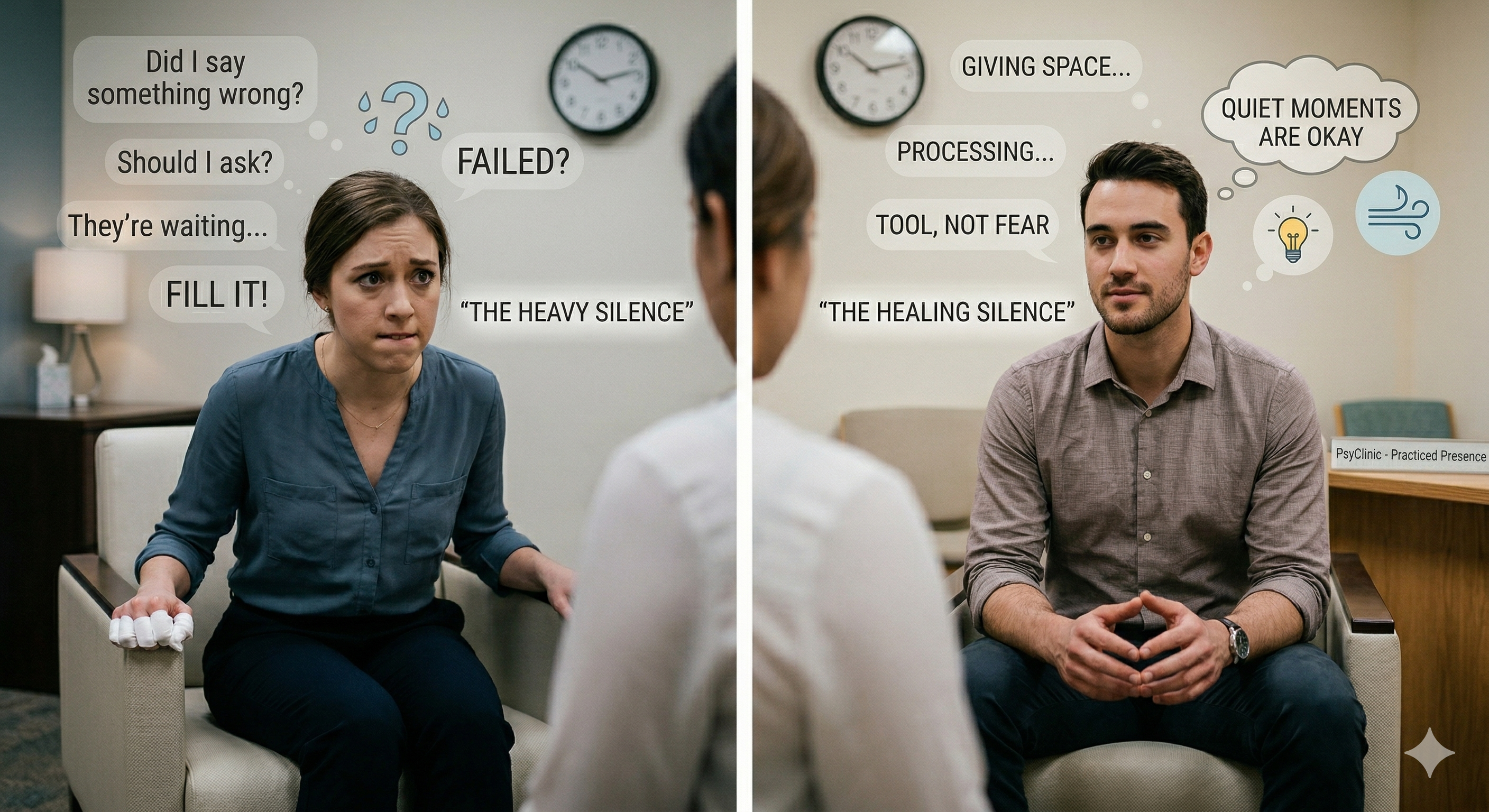
The clock on the wall ticked, each second sounding like a hammer. For Riya, a student therapist in her first session, the thirty seconds of silence felt like thirty minutes of failure.
“Did I say something wrong? Should I ask another question? They’re waiting for me to lead,” she thought, her palms growing damp. The urge to break the quiet—to fill it with any words at all—was overwhelming. To a beginner, silence feels heavy, awkward, and like a void that needs to be fixed.
Then there was Arjun.
When his client stopped speaking, Arjun didn't rush in. He sat with the quiet, offering a calm, steady presence. In that stillness, his client finally found the space to process a difficult emotion, eventually uncovering a breakthrough that words would have interrupted.
The difference wasn't just personality; it was exposure.
At PsyClinic, we know that silence is often the hardest part of therapy to master. That’s why we help students experience these "quiet moments" in a safe, guided environment before they ever meet a real client.
We teach our students that silence isn’t a sign of doing something wrong—it’s a powerful clinical tool. By practicing the pause, the "heavy" silence of a beginner transforms into the "healing" silence of a professional.
Sometimes, the best thing a therapist can say is nothing at all