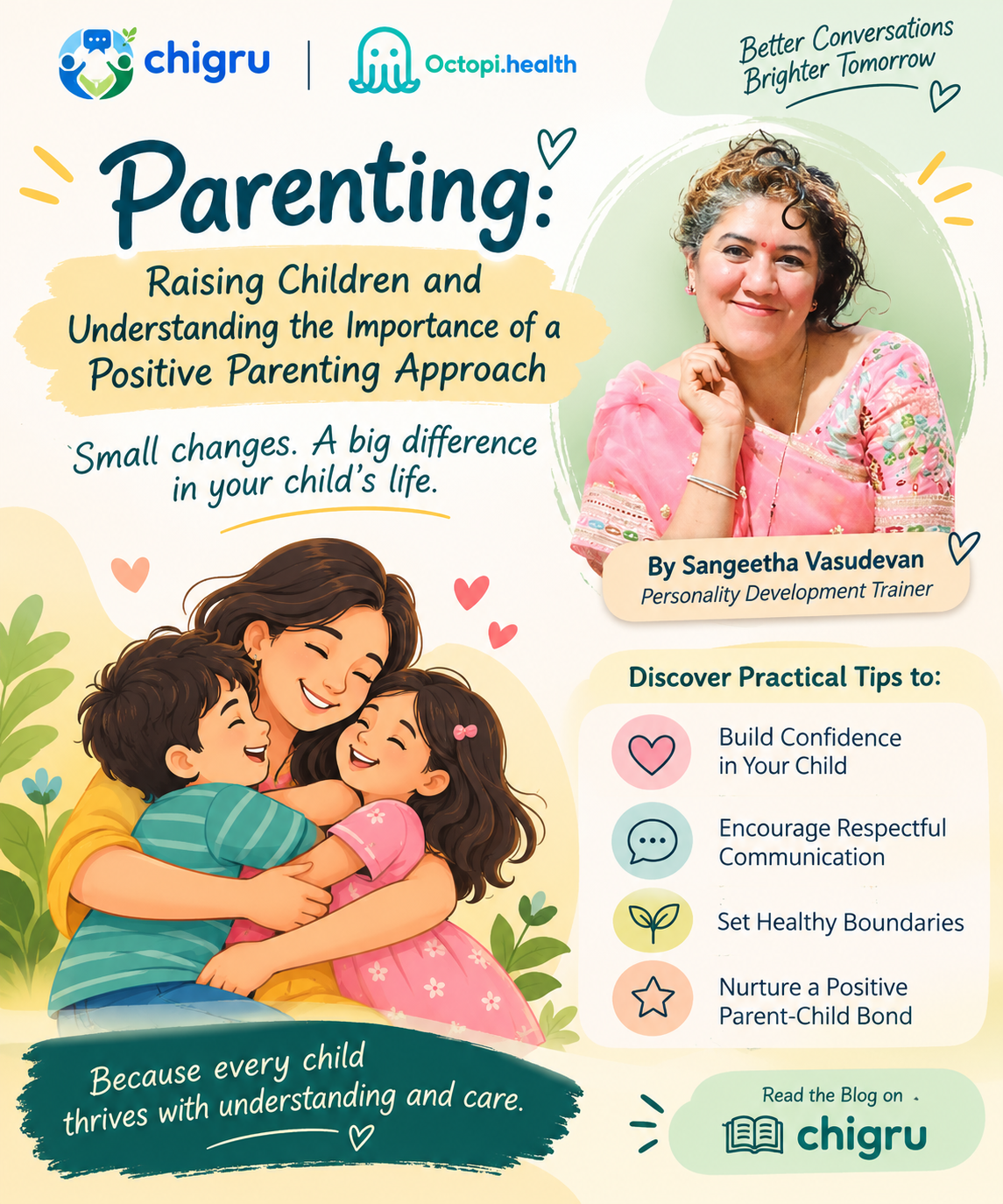
Parenting is one of the most meaningful responsibilities in life. It involves much more than providing children with food, education, shelter, and care. It also means understanding their emotions, guiding their behaviour, encouraging their independence, and helping them develop into responsible individuals.
Every child has a different personality. Some children follow instructions easily, while others may question, disagree, become stubborn, or struggle to express what they feel. It is often easy for parents to show affection when children listen and behave as expected. However, the real challenge begins when children do not follow instructions or respond in ways that parents find difficult.
These moments are important opportunities for parents to practise patience, understand their children's behaviour, and guide them with care.
A positive parenting approach does not mean allowing children to do whatever they want. It means setting appropriate boundaries while ensuring that children feel respected, heard, and supported.
Understanding the Role of Parents in a Child's Growth
Parents play an important role in shaping a child's early experiences, behaviour, confidence, and understanding of relationships.
Children observe how their parents communicate, respond to difficult situations, express emotions, and interact with others. These everyday experiences can influence how children learn to communicate and behave.
When a child disobeys an instruction, the immediate reaction of a parent can make a difference to how the situation develops. Responding with anger or shouting may turn a simple disagreement into a larger conflict. On the other hand, approaching the child calmly can create an opportunity for understanding.
Parents do not need to be perfect. What matters is making consistent efforts to understand their children and guide them through different stages of growing up.
Here are some practical parenting tips that can help create a more supportive environment at home.
1. Avoid Calling Your Child from a Distance
The tip: Instead of repeatedly shouting your child's name or giving instructions from another room, try approaching the child and speaking directly.
Why it matters:
Calling children from a distance may create a pattern in which both the parent and child raise their voices to communicate. A parent may begin by giving a simple instruction, but the child might respond by shouting back.
This can create an unnecessary cycle of raised voices, especially when parents are trying to teach children not to shout.
Approaching the child, getting their attention, and communicating calmly can make instructions clearer. It also gives parents an opportunity to understand whether the child has heard and understood what was said.
Try this: Walk up to your child, make eye contact if they are comfortable with it, and explain what you need them to do in a calm voice.
2. Avoid Taking Your Bad Mood Out on Your Child
The tip: Be mindful of how your personal stress, frustration, or bad mood affects the way you communicate with your children.
Why it matters:
Parents also experience stress, tiredness, work pressure, and personal difficulties. However, children may not always understand why a parent is upset.
When parents frequently express frustration through harsh words, an angry tone, or a lack of patience, children may become hesitant to communicate. Some may withdraw, while others may find it difficult to respond confidently in certain situations.
A supportive home environment gives children room to ask questions, share their thoughts, and express their feelings without constantly worrying about a parent's reaction.
This does not mean parents should hide every emotion. It means learning to communicate emotions appropriately.
Try this: If you are upset, take a moment before responding. You can tell your child, "I am feeling a little stressed right now. Let's talk about this in a few minutes." This helps children understand that emotions are normal and can be handled respectfully.
3. Never Compare Your Child with Other Children
The tip: Avoid comparing your child with friends, classmates, siblings, or other children of the same age.
Why it matters:
Every child develops different strengths, interests, and abilities. One child may perform well academically, while another may be more interested in sports, art, communication, or creative activities.
Constant comparisons can make children feel that their efforts are not valued. They may also develop jealousy, resentment, or negative feelings towards the child they are being compared with.
Instead of using another child's performance as a standard, parents can encourage their children to recognise their own progress.
Introducing positive role models can also help children learn about qualities they admire, such as confidence, discipline, kindness, creativity, or determination.
Try this: Instead of saying, "Why can't you perform like your friend?", try asking, "What do you think you can improve next time?"
Parents can also encourage children to learn from people they admire and set small personal goals.
4. Respect Your Child's Opinions, Even When They Seem Small
The tip: Do not immediately dismiss your child's opinions or choices, even when they appear unimportant or silly to you.
Why it matters:
Children need opportunities to express their thoughts and participate in age-appropriate decisions. When parents regularly disregard their opinions, children may become hesitant to share their ideas.
Allowing children to make small decisions can help them practise thinking, expressing preferences, and understanding the consequences of their choices.
For example, when selecting a colour for a dining table or choosing between two suitable options, parents can involve the child in the discussion.
This does not mean giving children complete freedom over every decision. Parents can establish boundaries and provide a limited number of appropriate choices.
If a child's choice is not suitable, explain the reason rather than rejecting the opinion without discussion.
Try this: Ask questions such as:
- "Which option do you like better?"
- "Why do you prefer this colour?"
- "What do you think would work best?"
These small conversations can encourage children to express themselves and participate in decision-making.
5. Do Not Take Every Hurtful Comment Personally
The tip: When children say something hurtful in a moment of anger or frustration, avoid reacting immediately with equal anger.
Why it matters:
Children may not always understand the emotional impact of their words. Sometimes, they express frustration without thinking about how their comments affect others.
Responding harshly can turn the situation into an argument instead of an opportunity to teach them about emotions and respectful communication.
Parents can acknowledge the child's feelings while also explaining that certain words can hurt others.
It is important to teach children that expressing anger is acceptable, but using hurtful language is not appropriate.
Try this: Once the child is calm, explain how their words made you feel. Encourage them to express what upset them using more respectful language.
Parents can also use facial expressions, a calm tone, and positive gestures to show warmth while correcting inappropriate behaviour.
Teaching children the importance of relationships, empathy, and thoughtful communication can help them understand how their words affect others.
6. Avoid Correcting Your Child in Front of Others
The tip: Whenever possible, avoid scolding or embarrassing your child in front of friends, relatives, classmates, or other children for mistakes made at home.
Why it matters:
Children need to feel that their dignity and self-respect are valued. Publicly highlighting their mistakes may make them feel embarrassed, rejected, or reluctant to communicate openly.
Repeated humiliation can affect the trust between parents and children. In some situations, children may respond with anger, resentment, or withdrawal.
Correcting a child privately can make it easier to discuss what happened and help them understand their mistake.
However, this does not mean parents should ignore serious behaviour or situations that require immediate intervention. Safety and appropriate boundaries must always come first.
Try this: If your child makes a mistake in front of others, avoid turning it into a public argument. Address the situation calmly when you have an opportunity to speak privately.
Explain what went wrong, why the behaviour was inappropriate, and what the child can do differently next time.
The aim should be to correct the behaviour without damaging the child's sense of self-worth.
7. Encourage Respectful Communication and Healthy Relationships
The tip: Teach children the importance of using appropriate words, listening to others, and maintaining respectful relationships.
Why it matters:
Children learn communication not only through instructions but also by observing the people around them.
When parents communicate respectfully, listen patiently, and acknowledge different opinions, children have an opportunity to observe these behaviours in everyday life.
Encouraging children to express disagreement without shouting, listen when others speak, and understand another person's feelings can support the development of healthy relationships.
Parents can also teach children that being confident does not mean being disrespectful and that expressing an opinion does not require hurting someone else.
Try this: Make everyday conversations an opportunity to practise respectful communication. Encourage children to explain their feelings, listen to others, and use thoughtful words even when they disagree.
Parenting Is About Guidance, Not Control
One important aspect of parenting is understanding that children are still learning how to manage their emotions, communicate their needs, and make decisions.
A child who disagrees with a parent is not necessarily being disrespectful. Sometimes, the child may have a different opinion, may not understand the instruction, or may be struggling to express a feeling.
Parents should try to understand the reason behind a behaviour before deciding how to respond.
A few simple practices can make everyday parenting more constructive:
- Listen before reacting.
- Give clear and age-appropriate instructions.
- Appreciate effort rather than focusing only on results.
- Set consistent boundaries.
- Allow children to express their opinions.
- Correct mistakes without humiliating the child.
- Demonstrate the behaviour you expect from your children.
These practices may not solve every parenting challenge immediately, but they can help parents build a more respectful and supportive relationship with their children.
Conclusion: Small Parenting Habits Can Make a Meaningful Difference
Raising children is a continuous learning experience for both parents and children. There will be moments of happiness, disagreements, misunderstandings, and challenges along the way.
The goal of parenting should not be to raise children who simply obey every instruction. It should be to guide them towards becoming confident, responsible, respectful, and emotionally aware individuals.
Small actions such as speaking calmly, avoiding comparisons, respecting opinions, and correcting mistakes privately can contribute to a healthier parent-child relationship.
Every child deserves to feel heard, valued, and supported. At the same time, every parent deserves patience and understanding as they learn and grow through the parenting journey.
Remember: Children learn not only from what parents say, but also from what parents do. A positive change in everyday parenting habits can begin with one conversation, one patient response, and one small step at a time.
About the Author – Sangeetha Vasudevan
Sangeetha Vasudevan is a Personality Development Trainer from Bangalore, India, who is passionate about helping individuals recognise their potential and develop skills that support their everyday lives.
Through her personality development training, she focuses on nurturing confidence, strengthening communication, encouraging self-awareness, and helping people approach personal and professional challenges with greater clarity.
Her training is designed for adolescents, young adults, and working professionals, with sessions shaped around the needs, experiences, and development goals of each group.
Sangeetha believes that meaningful personality development begins with understanding oneself. Rather than trying to become someone else, it is about recognising individual strengths, learning from experiences, and making steady progress towards personal growth.