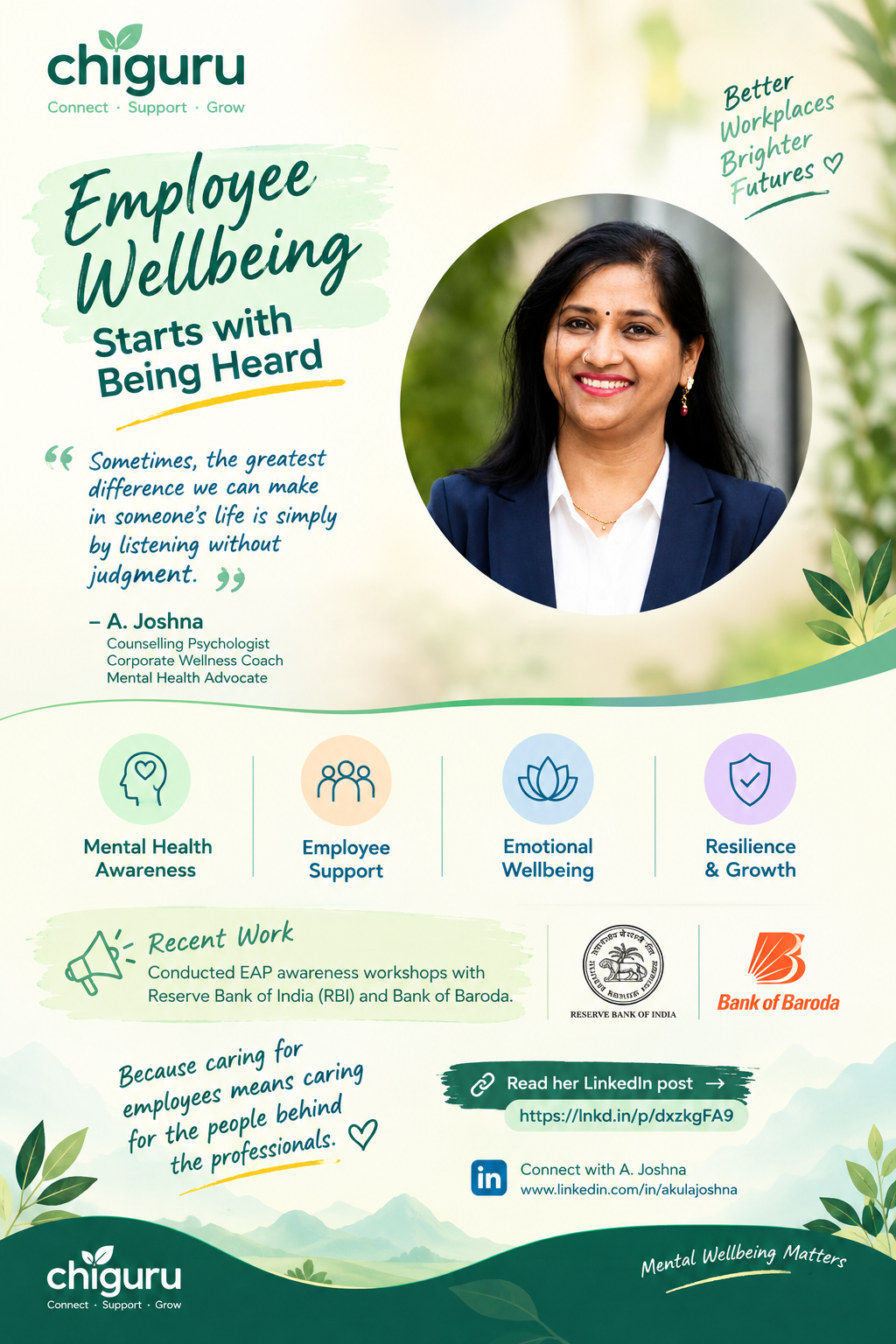
Author: Chiguru, based on information provided by A. Joshna
Introduction: The Human Side of the Workplace
Behind every professional is a person navigating emotions, relationships, responsibilities, and personal challenges. While workplaces often focus on performance, productivity, and professional growth, employee wellbeing is another important part of the conversation.
Workplace stress, relationship difficulties, anxiety, and emotional challenges can affect how individuals experience their personal and professional lives. Creating an environment where people feel comfortable seeking support is an important step towards encouraging emotional wellbeing.
For A. Joshna, Counselling Psychologist, Corporate Wellness Coach, and Mental Health Advocate, one belief guides her work: sometimes, one of the greatest differences we can make in someone's life is simply by listening without judgment.
Through her experience across counselling, education, corporate wellness, and community initiatives, Joshna emphasises the importance of understanding individuals, recognising their strengths, and creating safe spaces where they feel heard and supported.
Understanding Employee Wellbeing
Employee wellbeing involves more than professional responsibilities. People bring their experiences, emotions, relationships, and personal circumstances into the workplace.
When individuals face difficulties, they may need a supportive environment in which they can acknowledge their concerns and explore appropriate ways to address them.
Joshna's work in counselling has involved supporting children, adolescents, adults, couples, families, and working professionals through different life challenges. These experiences inform her perspective on the importance of emotional understanding and accessible support.
Her approach reflects a simple principle: healing begins with understanding.
Rather than viewing people only through the challenges they experience, it is important to recognise their individual circumstances, strengths, and opportunities for growth.
What Is an Employee Assistance Programme (EAP)?
An Employee Assistance Programme (EAP) is a workplace support initiative intended to help employees access assistance for personal or work-related concerns.
Awareness of EAP services can help employees understand that support is available and that seeking help can be a constructive step towards self-awareness and emotional wellbeing.
In her recent workshops with the Reserve Bank of India (RBI) and Bank of Baroda, Joshna contributed to employee awareness around EAP services.
The message behind this work is relevant to workplaces across sectors: seeking support should not be treated as a sign of weakness. It can instead be an opportunity to understand one's circumstances, recognise emotional needs, and work towards greater resilience.
For organisations, creating awareness is an important part of making wellbeing conversations more approachable. Employees need to know what support is available and how they can access it.
The specific services offered through an EAP depend on the programme and organisation.
Why Mental Wellbeing Matters at Work
Professional responsibilities can exist alongside family commitments, relationship concerns, personal expectations, and other life challenges. Employees may therefore benefit from opportunities to discuss their concerns and seek appropriate guidance.
Joshna's professional experience includes corporate counselling and wellness engagements, alongside her work as a clinician. Her work has involved implementing EAP initiatives and conducting mental wellness workshops.
These experiences bring attention to several important aspects of workplace wellbeing:
1. Creating Space for Open Conversations
People may hesitate to discuss personal difficulties because they are concerned about how others might respond. A supportive environment encourages respectful conversations and helps individuals feel that their concerns can be acknowledged.
Listening without judgment is an important starting point.
2. Recognising Emotional Needs
Understanding emotions and personal experiences can help individuals become more aware of what they are going through. This awareness can support informed decisions about the kind of help or guidance they may need.
3. Encouraging Help-Seeking
Employees should be aware of the support options available to them. Clear information about EAP services and other appropriate resources can make it easier to take the first step towards seeking assistance.
4. Seeing Employees as People, Not Just Professionals
A workplace consists of individuals with different experiences, responsibilities, and needs. A focus on employee wellbeing recognises the person behind the professional role.
As Joshna's message highlights, caring for employees also means caring for the people behind their professional responsibilities.
A Counselling Journey Across Different Settings
Joshna's professional journey spans counselling, education, corporate wellness, and community-oriented work.
Her experience includes working as a Consultant Counselling Psychologist at Accenture, supporting Meta clients, and serving as a voluntary counsellor with the Women Safety Wing of the Telangana State Police.
She has also spent over a decade in education, working closely with students, parents, and teachers. This experience has brought her into contact with the different concerns that can arise across educational and family settings.
In addition, her work has included mental wellness workshops for employees of the Reserve Bank of India and Bank of Baroda, as well as involvement with the Concept of Living Charitable Trust in initiatives focused on empowering women.
These varied experiences have strengthened her belief that mental wellbeing benefits from understanding and cooperation among individuals, families, and communities.
Her work reflects the importance of approaching people with compassion while recognising that each person's circumstances are different.
The Importance of Listening Without Judgment
Listening is a central theme in Joshna's approach to counselling.
When someone is experiencing a difficult situation, they may need an opportunity to express their thoughts and feelings without immediately being judged or dismissed. Being heard can help a person feel understood and create space for a more thoughtful conversation about their concerns.
Listening without judgment does not mean having all the answers or resolving every difficulty immediately. It means approaching another person's experience with respect and a willingness to understand their perspective.
This principle can be relevant in counselling relationships, families, educational environments, and workplaces.
Managers, colleagues, parents, and community members may all encounter situations where a patient and respectful conversation can make a difference to how a person feels supported.
At the same time, listening is not a substitute for professional care when specialised support is needed. Recognising when to seek appropriate help is also important.
Mental Wellbeing as a Shared Responsibility
Mental wellbeing is not limited to an individual's efforts. The environments in which people study, work, live, and interact also shape their experiences.
Families can encourage open communication. Educational institutions can create supportive spaces for students. Workplaces can make employees aware of available wellbeing resources. Communities can help make conversations about mental health more approachable.
Joshna's experiences across these settings reflect her belief that individuals, families, and communities have a role in supporting mental wellbeing.
For organisations, initiatives such as EAP awareness workshops can form part of a broader conversation about employee support. Communicating available resources clearly and respectfully can help employees understand their options.
For individuals, recognising personal concerns and reaching out to an appropriate professional when needed can be a meaningful step towards understanding their needs.
A Message of Compassion and Understanding
Joshna believes that every individual deserves the opportunity to discover their strengths, overcome challenges, and work towards a happier and more meaningful life.
Her perspective brings together listening, understanding, emotional wellbeing, and the importance of supportive environments.
Whether the setting is a counselling session, a classroom, a workplace, or a community initiative, the underlying message remains relevant: people deserve to be treated with dignity and understanding.
Employee wellbeing begins with recognising that professional responsibilities are only one part of a person's life. Creating space for mental health awareness and making support options visible can help build a more compassionate approach to wellbeing.
At Chiguru, we believe that conversations about mental wellbeing matter. By sharing perspectives from professionals working in counselling and related fields, we aim to make information about mental health and support more accessible.
Because sometimes, meaningful support begins with something simple: listening, understanding, and helping people feel heard.
About A. Joshna
A. Joshna is a Counselling Psychologist, Corporate Wellness Coach, Mental Health Advocate, and Educator. Her professional experience includes counselling children, adolescents, adults, couples, families, and working professionals.
Her work spans corporate counselling, employee wellbeing initiatives, educational settings, and community-oriented activities. She has contributed to employee awareness workshops on Employee Assistance Programme (EAP) services with the Reserve Bank of India and Bank of Baroda.
Connect with A. Joshna:
- LinkedIn: https://www.linkedin.com/in/akulajoshna
- Featured LinkedIn post: https://lnkd.in/p/dxzkgFA9
About Chiguru
Chiguru aims to make mental wellbeing resources and professional support more accessible by sharing educational content and perspectives from mental health professionals.
Editorial note: This article is based on information supplied by A. Joshna. It is intended for general awareness and does not replace individual psychological assessment, counselling, or other professional care.